
Here's what happens to your water.
Your water takes a short trip from the street to your glass. Along the way, a few surprisingly simple bits of science change what comes out of every tap. No jargon, no hype. Just what it does.
From the street
City water arrives carrying dissolved rock minerals and the chlorine used to disinfect it.
Carbon
Chlorine reacts with the carbon and turns into chloride. The taste and smell go with it.
Softening
Calcium and magnesium get traded out. Every tap in the house now runs soft.
Sink, with reverse osmosis
The membrane
Drinking water is pressed through pores about 0.0001 micron wide.
Your glass
Calcium and magnesium go back in for taste. What's left is water you'll want to drink.
The Water Softener
Whole house. Every faucet, shower, and appliance.
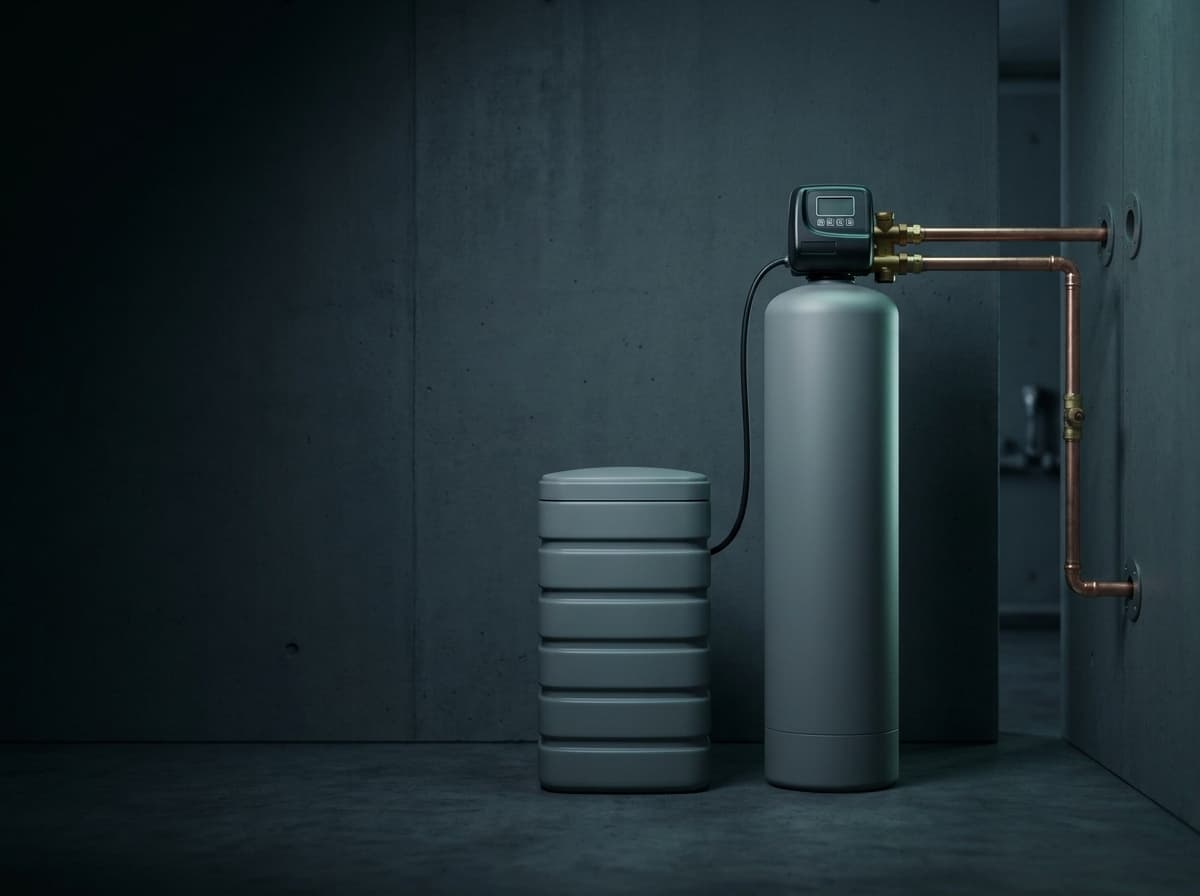
Hard water isn't dirty. It's water that picked up dissolved calcium and magnesium on its way through rock and soil. It's fine to drink, but it's hard on everything it touches: crust on faucets, spots on dishes, scale inside your water heater. Your system handles it in three steps.
- 1
It cleans up the taste.
Water first passes through activated carbon. Carbon is riddled with microscopic pores, so a single ounce has roughly five football fields of surface area. As water moves across it, chlorine reacts with that surface and turns into chloride. It happens in seconds, and the chlorine taste and smell go with it.
- 2
It makes a trade.
Next, water flows through a bed of resin: millions of tiny beads, each holding onto sodium. The beads are more attracted to calcium and magnesium than to sodium, so they grab the hardness minerals and let a little sodium go. The stuff that causes crust and spots stays locked in the tank.
- 3
It resets itself.
Eventually the beads fill up. When they do, the system rinses them with salt water from the brine tank. That flushes the hardness down the drain and loads the beads back up, ready to go again. It runs on its own and can be timed for overnight. Your job is keeping salt in the tank.
What you'll notice
- No more crust building up on faucets and showerheads
- Dishes and glass shower doors without the spots
- Soap and shampoo that actually lather
- Less scale inside your water heater, dishwasher, and washer
Reverse Osmosis
The water you drink and cook with.
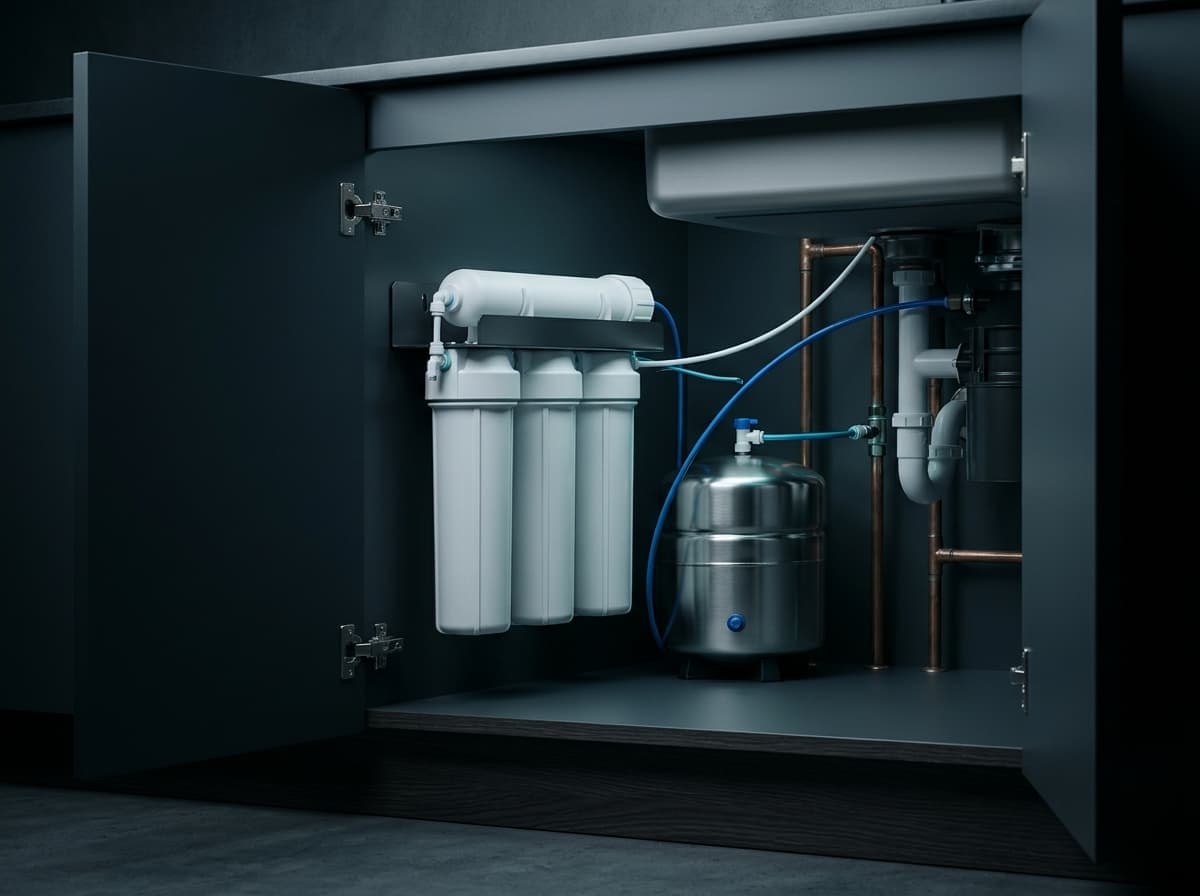
Osmosis is nature balancing things out. Put a thin membrane between clean water and water full of dissolved stuff, and water naturally flows toward the side with more stuff in it. Reverse osmosis flips that around. It uses your home's water pressure to push water the other way, through a membrane with pores around 0.0001 micron wide. That's hundreds of thousands of times finer than a human hair. Water molecules squeeze through. Most of what's dissolved in them can't.
- 1
Pre-filters catch the big stuff.
Sediment and carbon filters take out grit and chlorine first. Chlorine wears out RO membranes, so it never gets the chance.
- 2
The membrane does the heavy lifting.
Water is pressed through the membrane. Whatever it leaves behind is rinsed down the drain, which keeps the membrane clean and working.
- 3
Minerals go back in.
Water this pure can taste flat. A final stage adds calcium and magnesium back, so it tastes the way good water should.
What it takes out
According to the CDC, reverse osmosis removes common contaminants like these:
- Lead
- Copper
- Chromium
- Sodium
- Chloride
And it can also reduce:
- Arsenic
- Fluoride
- Nitrate
- Sulfate
- Radium
Minnesota's Department of Health also lists reverse osmosis as effective for PFAS, the so-called forever chemicals, when it's installed and maintained properly.
Why the two work better together.
The softener protects the membrane.
Hardness minerals are a big part of what scales up an RO membrane. Feeding it softened water makes its job easier.
RO takes back the sodium.
Softening adds a little sodium. Reverse osmosis removes sodium, so your drinking water doesn't carry it.
Every tap, plus one great one.
Soft water everywhere in the house, and filtered water where you fill your glass and your coffee pot.
Water Softener
$2,888Installed
- YesStops crust and spots at every tap
- YesTakes out chlorine taste and smell
- NoLead and metals filtered at the sink
- NoRemoves the sodium that softening adds
- NoPFAS reduction at the sink
Softener + RO
$3,388Installed
- YesStops crust and spots at every tap
- YesTakes out chlorine taste and smell
- YesLead and metals filtered at the sink
- YesRemoves the sodium that softening adds
- YesPFAS reduction at the sink